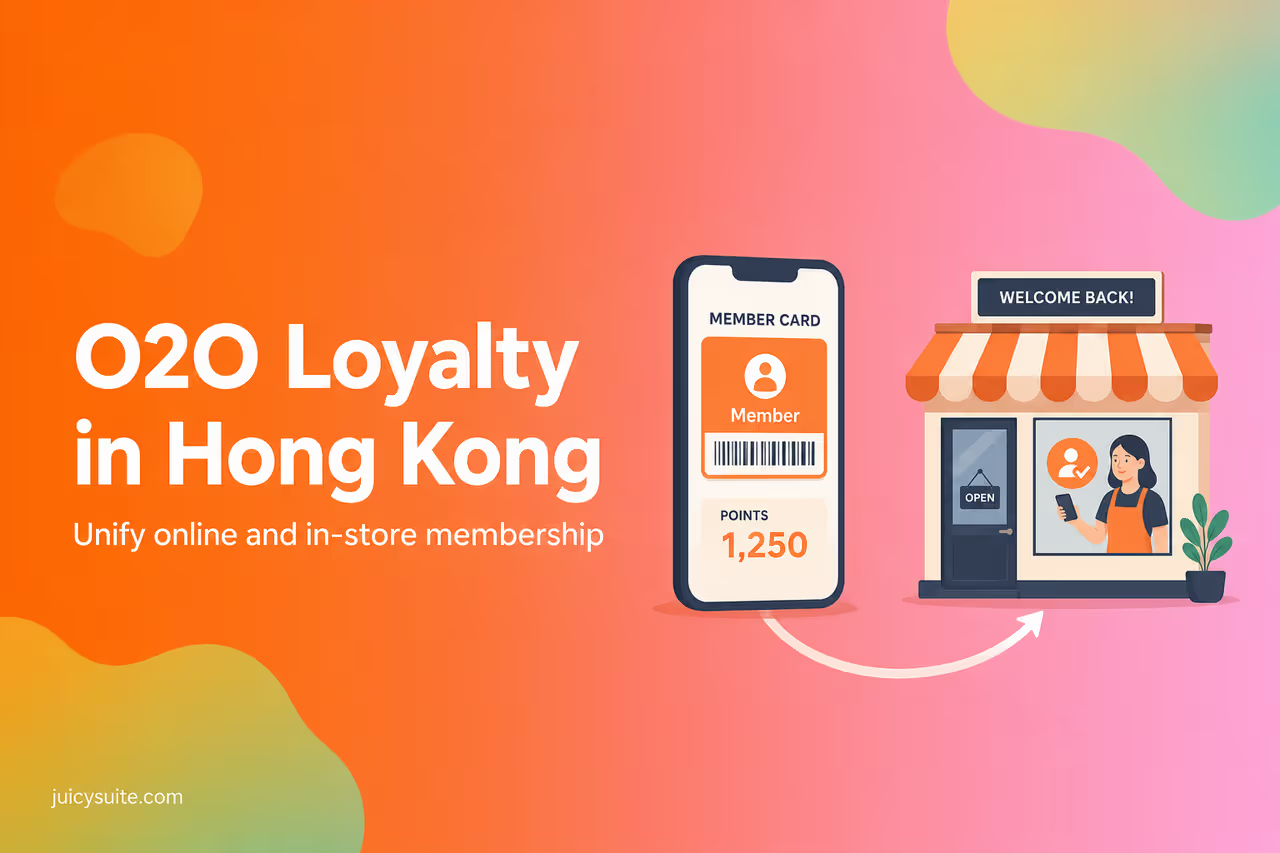
O2O Loyalty in Hong Kong: How to Unify Online and In-Store Membership
A Hong Kong shopper discovers your brand on Instagram, buys once through your online store, then walks into your Causeway Bay shop a week later — and to your systems, she looks like three different people. Her online points do not show up at the counter. The staff have no idea she is a repeat customer. The welcome she gets in store has nothing to do with the relationship she started online.
This is the O2O gap, and in 2026 it is the single biggest leak in most Hong Kong loyalty programmes. Omnichannel shoppers are worth far more than single-channel ones — industry research puts their lifetime value at roughly 30% higher — yet most merchants still run online and offline membership as two disconnected worlds. Closing that gap is what O2O loyalty is really about.
What Is O2O Loyalty?
O2O (Online-to-Offline) loyalty is a single membership programme that recognises the same customer whether they shop on your website, in your app, on social commerce, or at a physical counter. Points earned online can be redeemed in store and vice versa. The customer's profile, tier, and rewards follow them across every channel instead of resetting each time they switch.
The key word is unify. It is not enough to run an online loyalty scheme and a separate in-store stamp card. Real O2O loyalty resolves both touchpoints to one customer identity — so a purchase, a visit, and a click all add up to a single, complete picture.
Why O2O Loyalty Matters for Hong Kong Merchants in 2026
Hong Kong is one of the most omnichannel markets in the world. Consumers research on their phones, pay with mobile wallets, and move fluidly between e-commerce and physical stores in a single afternoon. Three forces make unified loyalty urgent this year:
-
Rising competition. A wave of mainland retail brands has entered Hong Kong, intensifying the fight for repeat customers. Retention — not acquisition — is where local merchants win or lose.
-
Higher omnichannel value. Customers who engage across both online and offline channels spend more and stay longer. Fragmented loyalty leaves that value on the table.
-
Seasonal spending peaks. Windows like Mid-Autumn Festival concentrate both online gifting and in-store footfall. A unified programme lets you reward the same customer across both, instead of counting them twice or not at all.
The Four Building Blocks of a Unified O2O Programme
1. One customer identity across every channel
Everything starts with identity resolution: matching the online account, the in-store purchase, and the mobile membership to one person. A customer data platform unifies these signals into a single profile, so you finally see the whole customer instead of channel fragments.
2. Membership that lives in the mobile wallet
Hong Kong consumers do not want another app to download or a plastic card to lose. Placing the membership card directly in Apple Wallet and Google Wallet means it is always on hand — at the online checkout and at the physical counter — with the same barcode identifying the customer in both places.
3. Points and rewards that work in both directions
The programme should let customers earn online and redeem in store, or earn in store and redeem online, without friction. That symmetry is what makes membership feel genuinely omnichannel rather than two schemes wearing the same logo.
4. Segmentation that reflects real behaviour
Once identity is unified, customer segmentation becomes far more powerful. You can tell an online-only browser from an in-store regular from a true omnichannel VIP — and reward each accordingly, instead of treating every member the same.
From Fragmented to Unified: A Practical Path
You do not need to rebuild everything at once. Start by connecting your highest-traffic online and offline touchpoints to a single membership identity, get points flowing both ways, then layer on segmentation and targeted rewards. Each step turns previously invisible customers into recognised, rewardable members — and turns scattered transactions into a relationship you can actually grow.
The payoff is compounding: the more channels a customer uses, the more you learn, the better you can serve them, and the harder it becomes for a competitor to pull them away.
JuicySuite helps Hong Kong brands unify online and in-store membership into one O2O loyalty programme — with a unified customer profile, mobile-wallet membership, and segmentation built for the local market. Talk to our team to design an omnichannel loyalty programme that recognises every customer, everywhere they shop.
Frequently Asked Questions
What is O2O loyalty? O2O (Online-to-Offline) loyalty is a single membership programme that recognises the same customer across online stores, apps, social commerce, and physical shops. Points and rewards carry over between channels, and the customer's profile follows them everywhere instead of resetting when they switch channels.
How is O2O loyalty different from a normal loyalty programme? A normal programme often runs online membership and in-store stamp cards as separate systems, so the same person is counted as two customers. O2O loyalty resolves both to one identity, giving a complete view of behaviour and letting customers earn and redeem across every channel.
Why is omnichannel loyalty important for Hong Kong retailers in 2026? Hong Kong shoppers move constantly between mobile, e-commerce, and physical stores, and omnichannel customers typically have around 30% higher lifetime value than single-channel ones. With competition rising, unifying loyalty is one of the most effective ways to defend repeat business.
How do you unify online and in-store membership? Start with identity resolution using a customer data platform to match online accounts, in-store purchases, and mobile membership to one profile. Add mobile-wallet membership so the same card works everywhere, enable two-way points, and use segmentation to reward each customer type appropriately.
Does O2O loyalty require customers to download an app? No. Membership can live directly in Apple Wallet or Google Wallet, so customers do not need a separate app or a physical card. The same digital card identifies them at the online checkout and the in-store counter alike.